The pre-track inspection, explained
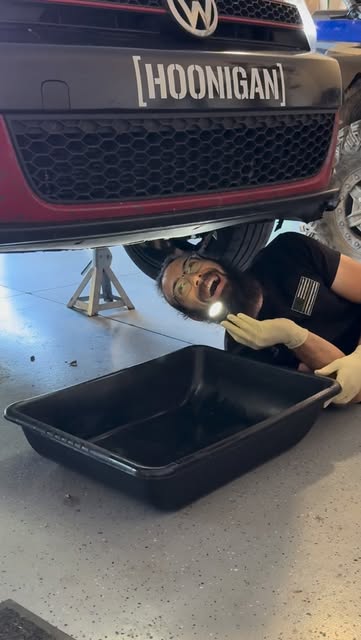
A pre-track safety inspection is not an oil change. It is not a state inspection. It is a specific set of checks built around how a car is actually loaded at an event — sustained speeds, heavy braking, heat cycles, and curb strikes — rather than how it gets used on the way to work.
Here is what we check, and why the order matters.
Start with what can end your day
We open with the safety-critical systems. Brakes first — pad life, rotor condition, fluid boil point, and line routing. A brake line routed near the exhaust is an easy miss on a street car and a very expensive problem at an event. Harness mounts and seat bolts follow, then the battery tie-down and kill switch if the event requires one. These are not afterthoughts at the end of the checklist. They go first because they are the items most likely to cause a tech failure or an unsafe situation if they are wrong.
Fasteners and structure
The torque sweep is the part most people skip and most people regret. Every suspension mount, every subframe bolt, and every load-bearing fastener gets checked. Coilovers that were installed in a hurry often come loose within a season. Subframe bolts that were never properly torqued loosen under load. We photograph any fastener that looks like it has been moving.
Structural checks — cracks around subframe pickup points, pulled welds on cage bars, cracked chassis rails — follow the torque sweep. These require the car to be in the air. You cannot see them from a creeper.
Suspension and steering
Bushings, spherical bearings, tie rods, and ball joints. We measure play and check condition rather than estimating by feel. A spherical that is marginal on the street becomes a handling problem on circuit, where load and heat expose wear that normal driving hides.
Steering stops matter more on cars with high lock — a drift chassis especially. If the stop contact point changes, full lock can take out a brake line or a CV boot before the end of a session.
Cooling and fluids
Cap pressure, hose condition, and coolant mix. We run the car to temperature and check for leaks under load before signing off. An event that is two or three sessions in a day runs the cooling system harder than most street miles. A marginal hose does not always leak in your driveway.
Oil and brake fluid are checked for condition, not just level. Brake fluid that has absorbed moisture boils at a lower temperature — exactly the wrong time to find that out is at the end of a long straightaway.
Tech sheet items
If your event has a tech checklist, we align the inspection to it. Fire extinguisher mounting, battery secure points, seat mounting, and harness dates are the items that vary most between sanctioning bodies. We have seen cars arrive at the gate with an extinguisher that was not rated correctly for the discipline. A tech card check the day before is not a formality.
The output
You leave with a written report, sorted into three tiers: safety-critical items that need to be addressed before the car goes on track, items to fix before the event if possible, and items to monitor over the season. Photos of every finding. A priority list, not a verbal summary in the parking lot.
If we find something major, you decide what to do about it. We give you the finding, the photo, and the options. Nothing gets fixed without your sign-off.
The inspection takes 60 to 90 minutes. The information it produces is worth considerably more than that if you find out a subframe mount is cracked two days before an event rather than during it.